Author Archives: andrewpendleton

Feeling the Stones

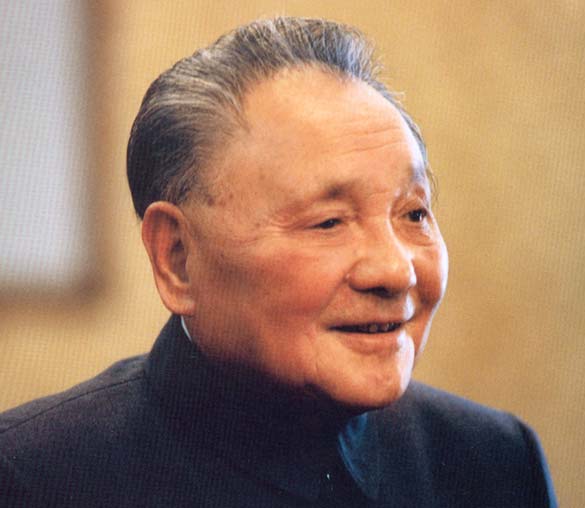
Deng Xiaoping (pictured) famously advocated a pragmatic approach to progress. ‘Cross the river by feeling the stones‘ he said. Is this cautious view of change in any way compatible with the measures needed to decarbonise economies?

We ask this because there is quite clearly a significant gap between the positions of the US and China in relation to the Copenhagen Accord. There’s a fair amount of debate concerning the semantics of the language of association or support. Continue reading

1 Comment

Filed under Uncategorized

Finance Ministers Threaten EU R&D Ambitions

We live in austere times in which talk of cuts is common. But there’s a difference between making cuts and cutting off your nose. EU finance ministers appear to be arguing for the latter by opposing the Commission’s long-standing plan to spend 3 per cent of European GDP on research and development.

Admittedly, Europe’s record of achievement in this area is not good. The 3 per cent target was set as part of the Lisbon strategy in 2000, and yet most EU countries’ expenditure on R&D has not changed much. In 2000, EU R&D spending was 1.8 per cent of GDP, by 2008 it was 1.9 per cent of GDP. Japan and South Korea – noted for their record on innovation – spend more than 3 per cent of GDP on R&D and China and India are catching the EU fast (all the data is drawn from the EU’s own Lisbon evaluation, which I have linked to earlier in this paragraph).

Continue reading

3 Comments

Filed under Uncategorized

A New Response to Climate Change

For six weeks, Political Climate has been finding its feet in the blogosphere. Much of what we’ve written hitherto has been aimed at making our views clear on some of the most important issues in the climate change debate. Thus we’ve covered growth, innovation, the underlying politics of climate change and geo-politics.

It’s hard to reflect on the shortcomings of conventional environmental wisdom without sounding negative, but this blog’s main aim is to contribute towards a renewal in thinking about climate change. Indeed, it is our desire to see the negative language and imagery of climate change replaced by a resolutely optimistic debate.

The ‘About‘ link above will take you to a longer explanation of our aims. We are also developing a Political Climate manifesto and a set of proposals for work in areas in which thinking needs to be developed, such as innovation policy and finance. In the meantime, we’ve been working on the appearance of the site and we owe its new smoothness to Lawrence. If you like what you see, we urge you to sign up to receive notification of new posts using the box at the top of the column on the right-hand-side of the page.

1 Comment

Filed under Uncategorized

Su Wei Says No Emissions Cap

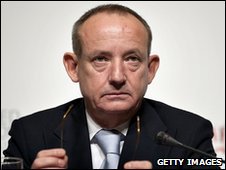
As if responding to yesterday’s post here on Political Climate, chief negotiator Su Wei (pictured) has confirmed that China will not accept emissions caps in the foreseeable future. He restated China’s commitment to its pre-Copenhagen pledge to reduce emissions intensity.

It really doesn’t matter whether you support or are critical of China’s position. You may think China can do more and should at least sign up to a global halving of emissions by 2050. China has weighed up its options, looked at the liabilities, costs and pitfalls of being bound into emissions targets – because that’s how emissions reduction is judged – and has decided for now to stay out of the game. Continue reading

1 Comment

Filed under Uncategorized

Connie and Kerry and Climate Politics

There will not be a global climate deal this year, there may, however be US climate legislation. A bet on the first rather than on the second of these statements would be more likely to trouble the cashier at William Hill. However, neither is going to have the bookmakers quaking in their boots.

In a meeting of EU foreign ministers, Connie Hedegaard has acknowledged the difficulties of getting a binding agreement before the South African climate summit in December 2011. Judging by the pugnacious determination of many to stick to the Bali negotiating modus operandi – see Martin Khor’s article in the Malaysian Star as an example – even this would seem optimistic. Khor advises developing world negotiators and is keen to see the Accord killed in favour of the UN twin track negotiations. Continue reading

2 Comments

Filed under Uncategorized

Further Questions on Finance

WRI has just put together this useful table of the fast start finance commitments made so far by developed countries. It tells a familiar tale, with much of what seemed fresh in the glare of Copenhagen, now appearing old and rehashed.

What can we take away from these intractable discussions on international financing of climate change actions? Principally that if our focus is to campaign solely for ‘public finance’ from funds that pass through national treasuries we may be some time.  Continue reading

Leave a comment

Filed under Uncategorized

Yvo To Go

Yvo de Boer has announced that he is to step down as head of the UNFCCC’s secretariat. One quick thought: Appoint a successor from a developing country!

Just as the WTO’s secretariat has always been seen as close to the European Commission, so the UNFCCC is increasingly perceived as a Eurocentric administration, not least because it’s based in Europe.

If the geo-politics of climate change are to be transformed, then as well as paying more attention to the debate at the domestic level – the mantra of this blog – there also needs to be more trust in the negotiations.

Leave a comment

Filed under Uncategorized

High Level Finance Questions

On Friday 12 February, the UN’s Secretary General announced the formation of a high-level advisory group on climate financing. It will be co-chaired by Gordon Brown – although for how long who knows – and Meles Zenawi of Ethiopia. The assumption is that this is the same high-level group mentioned in paragraph 9 of the Copenhagen Accord.

It is ‘tasked with creating practical proposals to boost both short- and long-term financing for mitigation and adaptation strategies in developing countries’ and is expected to report before COP 16 in Mexico in December. With wider negotiations moribund and the debate on emissions reduction targets seemingly going nowhere the group may have its work cut out as it is likely to be the sole focus of those doggedly pursuing a global climate deal. Continue reading

1 Comment

Filed under Uncategorized

Taxing Politics

Oxfam’s Duncan Green has responded to Matthew’s Tobin tax posts of yesterday and also to Owen Barder’s post, which raised concerns about whether financial transactions taxes might have a regressive impact. Duncan’s argument is that a narrow window of opportunity for a Robin Hood Tax on financial transactions has been opened by the financial crisis which could raise cash for good causes. He urges Matthew and Owen to get behind the Robin Hood Tax campaign rather than proposing alternatives.

‘There’s usually a reason why the first best ones [solutions – a wealth tax, as Matthew proposes, for instance] are not already in place – it’s called politics,’ says Duncan. I feel sure Matthew will want to respond, but briefly – in my lunch break – my view is that arguing for a limited tax on wholesale currency transactions, which the literature seems to suggest would be transparent and probably not passed through to the banks’ customers, does not exclude arguing for other progressive climate and development taxes. Continue reading

2 Comments

Filed under Uncategorized

Post-Copenhagen Positives

Writing in Foreign Policy David Roberts of Grist takes what turns out to be a refreshing view of the post-Copenhagen landscape. In particular, he quotes Terry Tamminen of California fame:

“Everyone is waiting for a U.N. deal, but carbon-cutting actions have been going on all along,” says Tamminen. “It’s been right under everyone’s nose. The Copenhagen Accord, having surfaced an existing web of national and subnational policies, may ultimately prompt a needed shift of attention and pressure to what is happening on the ground and what is required to link up and accelerate the many promising efforts already underway.” Continue reading

2 Comments

Filed under Uncategorized