Stoking the Eskom Debate

Before we start, it’s important to make two things very clear. First, Political Climate thinks that building new coal-fired power stations without emissions abatement is unwise on climate grounds. Second, we think subsidies for the capital costs of new electricity generation should now be focussed on renewables. But, as the unfolding debate concerning the building by Eskom of a massive coal power plant at Lephalale in South Africa’s Limpopo Province illustrates, simply holding such views is not enough.

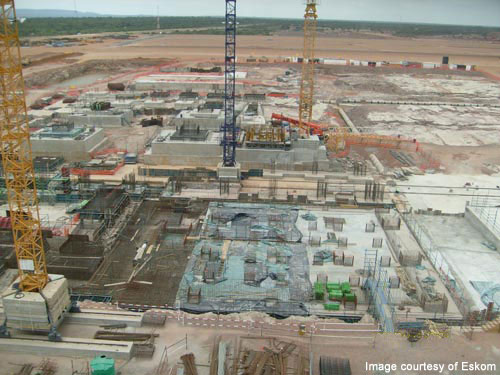
The plant (the above picture is its construction site) has been named ‘Medupi’ by state-owned Eskom. This apparently means ‘rain that soaks parched lands’ – perhaps unfortunate given the climate impacts of coal. At 4,788 MW of installed generating capacity, Medupi will be an absolute monster; reportedly the fourth largest coal plant in the world. Continue reading


7 Comments

Filed under Uncategorized

Copenhagen’s Carcass

Six months on and commentators continue to pick the last morsels of analysis off the carcass of the 15th Conference of the Parties in Copenhagen. The UK’s Guardian, for instance, has had a couple of goes at this piece, which pins the blame on the Danes and their cursed text.

Per Meilstrup, a Danish journalist, has written a whole book on COP 15 – largely the source of the Guardian piece – and reveals the ‘real’ Danish text on his blog.

Mistakes were clearly made – by the Danes and the UNFCCC’s secretariat – but the key question that the climate coroners need to ask is arguably this one: Had Lars Lokke Rasmussen not botched the high-level diplomacy, would Copenhagen have concluded with a more substantive outcome? The answer is almost certainly still no.

Why? The reasons are fundamentally to do with politics at the national level, which is where the politics mostly are. China and the US had already made announcements before Copenhagen and because of their respective domestic decision making processes, neither were in a position to increase their offers. So the conventional logic of diplomacy – that governments always arrive at summits with something extra tucked in their back pockets – did not hold. Continue reading

Leave a comment

Filed under Uncategorized

Spill, baby, spill!!

2-3 million litres of oil a day are now gushing out of the ruptured pipe at the base of the BP platform in the Gulf of Mexico, and it could get worse before a solution is found. Attempts so far to stem the flow have failed, and oil slicks are now threatening beaches in Louisiana. The volume far exceeds the US’s worst previous oil spill – the 1989 Exxon Valdez disaster in Alaska, but the impact of the Gulf spill will not be just about how much hits the beaches. For this disaster is not in a distant state beyond Canada, but very visibly right in America’s backyard. The Gulf fishing industry is already hit hard – if storms push the spill towards Florida’s coast, a $60 billion a year tourism industry is not going to be happy.

But what is really striking about the Gulf disaster is Continue reading

1 Comment

Filed under Uncategorized

Off target?

So EC climate commissioner Connie Hedegaard today finally published a paper backing away from a proposal that Europe commit itself to a 30% reduction in emissions by 2020 (despite rumours to the contary on the front page of The Times, subsequently taken to task by George Monbiot!).

The economic slump since 2008 means that the existing 20% target now looks a lot easier and cheaper to achieve. The financial crisis also took the steam out of the EU ETS carbon market. With Greece in fiscal meltdown and austerity measures under way in Spain, Portugal and now the UK, Europe may well see a serious double dip recession, making even a 30% target much less scary than it seems. A shift up to 30% would also have resuscitated the carbon market. But of course there has been resistance, not least from Germany and eastern Europe, but also the Confederation of British Industry here in the UK. All of this is a reminder of how politically difficult a direct target-led approach is.

On the face of it, this looks like a real blow for those who think Europe should try to rescue its global climate leadership in the wake of the Copehagen fiasco. However, Continue reading

Leave a comment

Filed under Uncategorized

We’re back….!

Hi all – we went away for a little while there, due to various pressures at work and home. But expect to see postings much more frequently on Political Climate from now on. Coming up:

  • The limits to environmentalism Part 3 – we review Tim Jackson’s Prosperity without Growth
  • A Tale of Two Milibands
  • Why we need a low-carbon version of fair trade
  • The case for more public borrowing (are these guys crazy!?) for low carbon investments

We’ll also start looking more seriously at what the new coalition government is going to do. Later today we’ll blog on the will-they-won’t-they story of the European 30% emissions reduction target.

Leave a comment

Filed under Uncategorized

Climate Policy Crisis

US and Australian shelves are suddenly straining under the weight of planned climate change policies. In the space of a few days, American Democrats appear to have put climate and energy legislation on hold in favour of a Senate bill on immigration and Rudd’s government down under has unequivocally placed its proposed cap and trade scheme in political storage.

Behind both of these decisions is a complex set of national, political circumstances. In the case of the US it’s clear that Democrats have spotted electoral gain in forcing the Republicans’ hand on immigration and also significant risk in not doing so. As a result, climate and energy may have to wait; the political cost being the probable loss of the support of Republican Senator Lindsey Graham.

The case of Australia is perhaps more complex still but also all about the politics. Continue reading

1 Comment

Filed under Uncategorized

Beck to the future

A few days ago Duncan Green from Oxfam posted a thoughtful review of a thoughtful book – Why We Disagree About Climate Change published last year by Mike Hulme, a climate modeller from the University of East Anglia. At the core of the book is the idea that climate change will bring about a transformation in human life that is far more profound than most people realise, certainly those with their eyes down on the immediacy of policy. Duncan’s review picks up on a quote from the book and goes to on interpret that quote: Continue reading

6 Comments

Filed under Uncategorized

Conservative thinking on climate

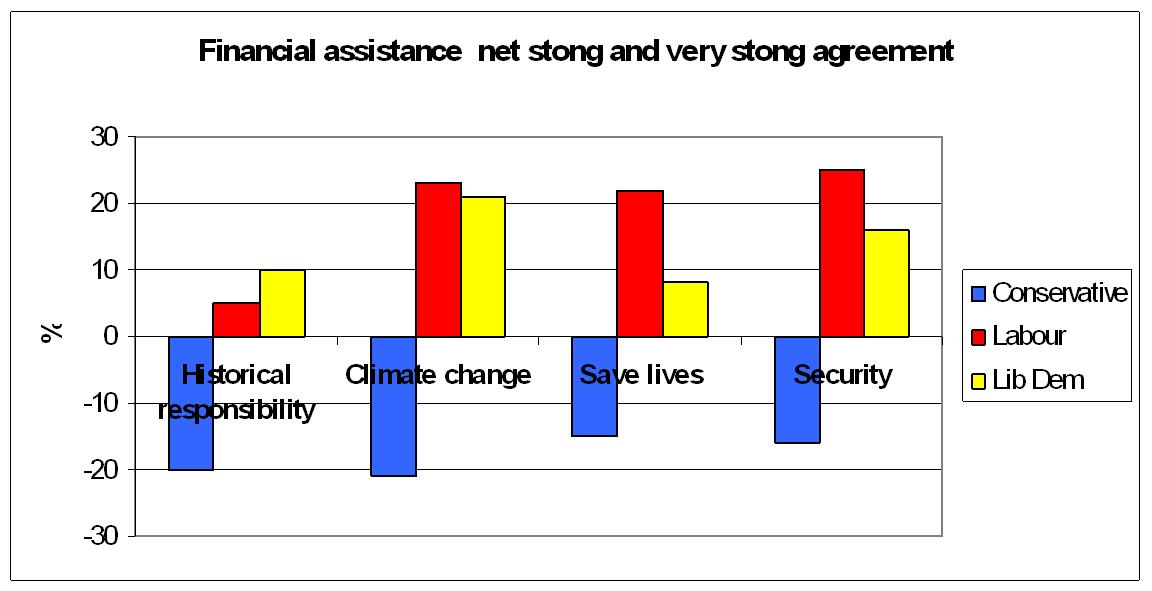
We’ve mentioned before the polling the Institute for Public Policy Research did last year with Brand Democracy, testing out different ways of framing climate policies in 157 marginal constituencies across Britain. Over 3,000 people on YouGov’s panel were surveyed on-line, and the data then weighted by social, demographic and voting patterns. The fieldwork was carried out in September ahead of the party conference season.

A few key results stand out. Continue reading

6 Comments

Filed under Uncategorized

India and Climate Negotiations

India has often been seen as an awkward customer in international processes. While this is indubitably true in the climate negotiations, it is not merely because of negotiating style. Rather, it is down to India’s complex national interests, which are no less pressing and from a political perspective arguably more knife-edge critical than those faced by the US.

There is no other country quite like India. As the World Bank’s country overview shows, while poverty rates have been reduced in the past two decades, more than one quarter of the rural and urban population remain poor in absolute terms. Continue reading

7 Comments

Filed under Uncategorized

BASIC Indian Considerations

India and China are so often mentioned in the same breath, especially in climate change negotiations. Prior to Copenhagen, they joined up with Brazil and South Africa to form the BASIC grouping. But many in Delhi are asking a two-pronged question about BASIC; ‘does it serve India’s interests’ and ‘for how long’?

In some respects BASIC is an evolutionary beast whose ancestors were the G90 and G20 that mated during the Doha round of World Trade Organisation talks and ultimately brought them to a grinding hault. Like the ‘G110’, as it became known during the WTO’s 2005 ministerial meeting in Hong Kong, BASIC is also a blocking constituency. However, it differs from the G110 in the rather obvious respect of being a much smaller group of large, developing world economies and is also Sino-centric; the G110 was not. Continue reading

1 Comment

Filed under Uncategorized